Warnings for Time Machine Fiction

Placeholder Image

English is an evolving language. It’s been evolving ever since someone decided to call it English.

If you wanted a time machine to go back in time within England—lets say to the 19th or 18th Century, then there would be no problems. The people you meet speak more or less the English you speak.

“I, poor miserable Robinson Crusoe
Came on shore on this dismal, unfortunate island which I called,
‘The Island of Dispair.'”
                                    Robinson Crusoe, Daniel Defoe, 1719

But slang at the time would be a little more difficult:
Battyfang, Kickerapoo, Land Pirates, Gutfoundered, Nitsqueeger, Whapper.

15th Century is Shakespeare times.
“Thy natural magic and dire property on wholesome life usurp immediately.”
Hamlet Act III

Although Shakespeare did use iambic pentameter rythmns that I want to utilise also. More about that later.

Shakespeare talk is a little harder to follow, but not everyone talked like that, there were words like:
Yantippe, Abbess, Thornback, Barber-monger, Bleater and Brabble… are but a few.

The Great Vowel Shift

Came between the years 1350 and 1700.
Pronunciation: Tea = Tay, Gone = Goan

14th Century people spoke like the Bible:

Now therefore thus saith the Lord, Thou shalt not come down from that bed on which thou art gone up, but shalt surely die.’
                                                       KJV2 Kings 1:4

Common words at the time were:
Cropulous, Hugger-mugger, lettice-crop, petty-fogger, Pilgarlik, mumpsimum.

“Whan that Aprill, with his shoures soote The droghte of march hath perced to the roote And bathed every veyne in swich licour, of which vertu egendred is the flour.
Canterbury Tales 1389

11th Century was the Old English

The Lords Prayer
Foeder ure pupe eart on heotonum,
si pin nama gehalgod,
to becume pin rice,
gewarpe din willa,
on eordan swa swa,
or hefonum.

I imagine in 600 years from now this English will be entirely different. So, I wouldn’t want to go back further than the 14th century. Further than that in millions of years. even though the Earth is 3.7 billion years old, I would not advise going back further than 300 million years as the lack of oxygen may become a problem for breathing. Unless you took a breathing mask, but be careful of the radiation as the ozone layer was formed from oxygen. So stay under ground.

Latin Still in English Language

Latin is an old language that was used in Rome around the 5th Century BC. It was the official language of the Roman Empire in the 1st Century BC. Many of the words are still used in everyday English today.

Top 15 Latin Words Still Used Today:

  1. Exempli Gratia (ex-EM-pli GRA-ti-ya) = For the sake of; e.g.
  2. Nota bene (NO-ta BEN-ay) = Note well; n.b.
  3. Persona non grata (per-Sone-a non GRAT-a) = An unwelcome person.
  4. Postscriptum (post-SCRIP-tum) = Thing having been written afterward; p.s.
  5. Quod erat demonstrandum (Kwod e-rat dem-on-STRAIN-dum) = Which was to be demonstrated; Q.E.D.
  6. Requiescat in pace (rek-wi-ES-cat in par-kay) = May he or she rest in peace; R.I.P.
  7. Status quo (state-us kwo) = The state in which things are
  8. Veto (VEE-tow) = I forbid
  9. Ante meridiem (AN-tay Mer-ID-ee-em) = Before noon; a.m.
  10. Post meridiem (POST me-RID-ee-em) = After noon; p.m.
  11. Curriculum vitae (cur-IC-you-lum VEE-eye) = The course of life, or school & work history
  12. Ergo (UR-go) = Therefore
  13. Non compos mentis (non Com-pos MEN-tis) = Not of sound mind
  14. Quid pro quo (KW-id PR-o K-Wow) = This for that
  15. Ad hominem (AD Hom-in-em) = To attack the man

11 Items that Constitute a Story

img_7900All the things that constitute a fiction story are intertwined. They all react to and from each other. Characters direct experiences and events fashion characters. The characters are reflections of their environments, and impact on those locations.

1. Characters
The characters are essential to successful fiction. The reader will not give a damn about the antagonist if that character is not likeable or interesting. The reader re-reads stories because they enjoy being in the company of the characters.
Names: The name of a character does enforce a reaction. What’s the difference between Charles, Chuck and Charlie? Between Jim, James and Jimmie?
Dialogue: Even though the author should write perfect grammatically correct English withing any dialogue. This diction and syntax do reveal a lot about the characters.
Action: A character is as they do.
Description: If a character’s physical description is described, we must assume it is for a good reason. In the short stories I have written and had published so far, I have not indicated whether the protagonist is male or female. Why? Reviews I have obtained of my story show that the women that read them think the protagonist is a woman and the men believe that they are male. This does become natural to the reader. If I were to choose a gender for my protagonist, then the other sex readers would already be out of their comfort zone.

2. Setting
The settings that occur are sometimes general. For example somewhere in the UK or USA in the latter half of the twentieth century, or early twenty-first century. Having locations, you are familiar does enable you to become relaxed about the things that might happen and events that things may cause. Having a setting in the distant past in another place of the world that you have not been doing require research. This research takes time and does bring more ideas of things that may result from an action.

3. Plot
There are different types of scenarios that the protagonist experiences with internal and external forces: Chase, love, sex, argument, fight, conflict and hunt. Of course, there are more general scenes that show the action in between events such as those listed.

4. Foreshadowing
Actions, dialogue and images are hints to future incidents. Foreshadowing enhances the sense of inevitability and coherence in a story. The end of a story should seem inevitable, and this aspect can help the author to play with the reader’s imagination. Leading them down the wrong path.

5. Symbolism
This aspect concisely conveys meaning and/or reinforces the plot. Heavy handed or intrusive symbolism can overpower the reader and make things seem artificial or contrived. Symbols should generally blend into the story, but be apparent to a discerning reader.

6. Irony
This aspect adds to the textual richness of a work of fiction. Life is full of ironies.
Situational Irony: What we expect to happen doesn’t.
Dramatic Irony: The reader knows something the character doesn’t.
Verbal Irony: What a character says is not what the character actually means.

7. Theme
The timeless and universal truths or at least the author’s idea of truth manifested through events and the characters.

8. Motif
A subtheme or a pattern of images or actions.

9. Tone
The attitude towards a subject. Light-hearted? Somber? Wry? Cynical? Admiring? Sentimental? Hard-boiled?

10. Mood
How characters feel about their present circumstances. Tone and mood might coincide or clash. A role’s attitude may be self-pitying

11. P.O.V. – Point Of View
Whose eyes do we see events taking place, the thoughts and feelings that ensue?

Short Story First Draft

This story will change, but here’s my first attempt. I am using British English although it is set in New York City.

You see an otherworldly creature on the way to work. No one else can see it. What do you do?

I left the bus at East 14th Street—near Union Square West. On my way to the coffee shop to work. It was 6:50 a.m. and notably busy with people going to their jobs, and so we had to avoid collisions with each other. There were all types of characters, tall, short, well dressed or in work clothes.
Out of the corner of my eye, I saw a small person dressed in fancy dress. It looked like a little black-eyed, grey alien. A fabulous costume, and looked perfectly right. I smiled at the costumed person and quickly walked passed.
The coffee shop was only at the end of the block. A car screeched around a corner behind me, so I twisted my head to look. The alien looking costumed person was right behind me. I stopped and turned around to talk with this person. “Why you trailing me? Can I help you? Excellent costume by the way.” There was no reply. I frowned and turned to continue my walk to work.
Several steps later, and anticipation got the best of me, so I turned and looked. The alien looking person was still walking behind me. I stopped and turned. “Look, what do you want?” No response. I crouched in front of this character. “You not going to say anything?” Reaching to touch its arm, I could feel the warm grey surface. I removed my hand instantly with some shock.
Its eyes were black and large like an insect, and its body was grey in colour and had thin arms and legs. No nose, or lips around its small mouth. I’d crouched in front of this being for about thirty seconds, and I saw passers-by looking at me with an expression of confusion. A man walked by, and his face seemed the same. A young woman glared at me, so I spoke, “I, I truly think this is an alien, and not simply a fancy d, dress costume.” The girl giggled and walked on her way. What was so funny? Couldn’t she see the black-eyed grey character presently in front of me? I caught the eye of another passer-by. This one was a man in a suit scowling at me. I spoke louder, “Hello there, What’s the problem? Can’t you see this strange costumed person in front of me?” He merely gave a sigh and had a look of disgust on his face. He turned and walked on.
Now I was becoming uncomfortable with confusion. I crouched back down in front of this grey, black-eyed alien. “You appear to have chosen me on purpose. Why me? —I only work at a coffee shop along the road. There are others who would help you much better than myself.” I looked at this alien in one of its huge black eyes, and its head moved to one side like it was trying to understand. I sat cross-legged on the floor in front of the grey alien. I took my mobile phone out of my pocket and said, “I’m going to phone someone who can help… ok?” looking at it in the eye; it didn’t truly seem to understand anything. I called the police and said, “Hello, I’m sat in front of a black-eyed, grey alien on the corner of East 14th Street, near Union Square West.” The officer on the phone responded by saying, “Honestly? Are you sure? This is a prank caller, isn’t it? I’m busy, please don’t prank call.” “I realise this sounds absurd but,” the phone was then hung up. Damn. I turned my phone off.
All right, I was in a situation, and I needed to take action as this grey alien is real. I looked back into the eyes of the grey creature and thought, “If I could see it, perhaps someone else could too, and all I needed to do was to make matters clear to the fifty or so people in the area. Someone might see the alien too. There was a fire hydrant, plainly behind the alien. I made sure the creature was closer it. I stood to my feet and moved towards the steps leading into a building so I could be in a greater location to speak to everyone. On the third level, I could see all along the block, and there was a good quantity of people in view. I announced, “Excuse me, everybody!” This got a lot of attention. “I have this situation, where there is, in fact, a strange creature near this fire hydrant there.” As I said this, I was pointing to the grey alien. “I have come to the assumption not everyone can see it.” At this moment, everyone was beginning to look away and walk in their original direction. “Someone must be able to see it.” A group of five men stopped, and one asked, “Where is it?” So, I responded by saying, “It’s right in front of this fire hydrant… there.”
As I pointed to the black-eyed, grey alien; it raised its head; seemed to smile; then disappeared altogether. “Oh, it’s now disappeared to me too. Oh shit!”

A Scene & Sequel

Placeholder Image

Scene

  1. Goal – A want of the character.
  2. Conflict – A disapproval, argument, fight, or wrong doing detection.
  3. Disaster – Not the sinking of the Titanic, but maybe just a mistake, incompletion, loss or inaccuracy.

Sequel

  1. Emotion – What was felt, and pain; where it was and how strong.
  2. Thought – The thinking and imagination that leads to darker places or similar.
  3. Decision – The act of working through the disaster and a resolution plan
  4. Action – The journey to the correction of the disaster.

A Scene and Sequel pair go together as the scene is the action that takes place. All fiction is about conflict, and there is conflict in every scene. It may just be that the protagonist just wants to find a book in a library or on Amazon store. The conflict could be that she just couldn’t find it, or it’s out of print, or it’s not available as an E-book or PDF. The Sequel is the reaction to the problem and the emotion. In a movie, the sequel is only transferred to the audience with facial expressions or visual changes in behaviour. In a novel, the sequel is an in-depth view of the internal emotional state of the character.

Events that take place such as going to the shops for some milk, getting a pint and returning home is not something that is worthy of a scene in a novel or movie. In a novel, it can be just stated that a character went to Waitrose for a pint of milk; bought it and returned home. This went entirely to plan. If the milk purchase is important to the story, then it can just take a sentence to inform the reader.

The Martian movie is an example of where The Martian novel shows a greater in-depth view of the emotions occurring to the protagonist; Mark Watney. Also, as the story is set in the reader’s imagination it is accurate to the laws of physics and biology. Where as the movie bends these laws to save money and don’t have to make new effects of living in a gravity much less than Earth, also Mark Watney is also a mechanic in the book.

Things you should know becoming a Writer & selling novels

Placeholder Image

These are a few tips I have discovered for anyone who wants to make any money from writing fiction novels.

1. Business
– It is handy to keep track of the money you spend on paper, Tipp-Ex, pens, printer ink, printers, writing software ownership or membership fees, website ownership costs, editors fees, cover art charges, ISBN costs, publication fees, publicity costs, printing fees.
– Also, if you are lucky enough to publish into a market place then the amount of money you make on sales of each book and how many you have to sell to break even.
– I do keep a spreadsheet of the expenses and revenue.

2. Social Media
– Just having a Facebook, Twitter, Google+, a dedicated website, Path, Pinterest, Instagram, LinkedIn, Tumblr, iAuthor account and publishing things to these accounts is not enough.
– You need to interact with people with hashtags:      That you identify as being applicable. Attract your audience.
– It would be excellent if you could make YouTube videos about interesting things and make them humorous as people would rather watch an amusing video for a few minutes than read a long paragraph or pages of writing (I’m looking to get into this at some point with a YouTube page).

3. Marketing
– There are two types of marketing, Product Promotion and Brand Promotion.
Product Promotion – This is the novel you are writing and should be in place just before you have finished the book and it is available for sale.
Brand Promotion – This is yourself and your writing style and genre, or genres in which you write. This promotion should be ongoing all the time. Every day you should be using your website and Social Media to promote who you are and the subject of your novel to find people who are interested in that genre and get them excited about what you write. After all your job is to manipulate their imagination and take them to places that they will enjoy.

4. Graphic Design
– The cover of a book is very, very important and don’t think you can design it yourself and catch the passerby’s eye enough to buy the novel. You need to go to a cover art designer for the cover of your book, be it a paperback or an E-book.

5. Web Design
– There are some website design brands; I have chosen WordPress as you can choose from many website designs, link to all the social media sites and have regular visitors and their email addresses. You also have how many views per day your site is getting; which country the viewer came from and what link or search engine they used to arrive at your website.

– Be careful about copyright and not use images, sounds or videos from an unknown source, as you may infringe copyright laws.

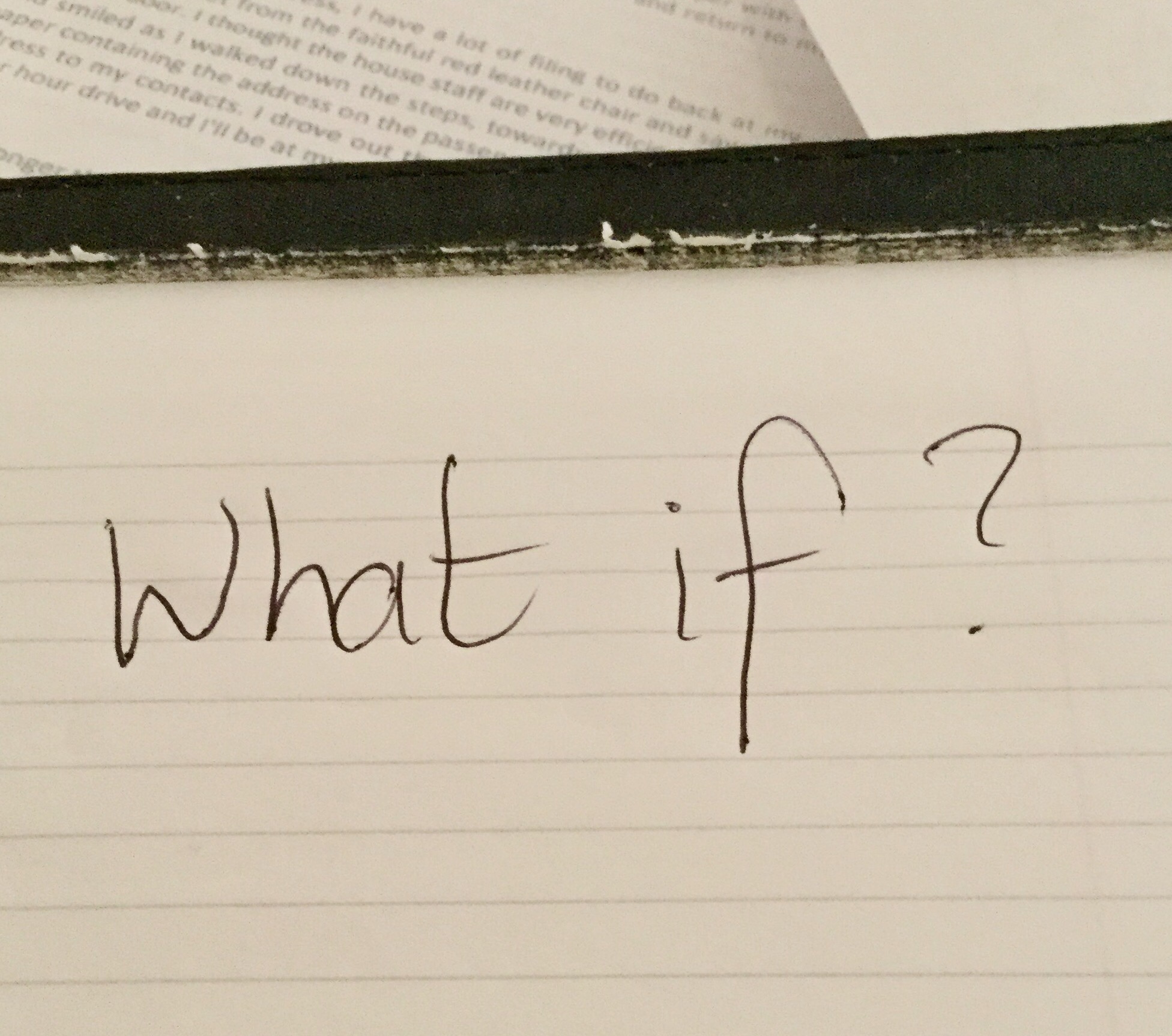
What if?

What if?

A lot of story ideas come from general life experiences. There are genres and Sci-Fi doesn’t normally happen everyday. If you ask the question What if?

What if dogs could spesak any we could understand and talk back?

What if ghosts were real and around all the time? Once someone died, they turned into a ghost.

What if we could speak and understand every other animal on the planet? What sort of government would we have to have to handle that?

There are lots of different places and world states. They create more questions to answer.

Be aware that the reviews of my Spring Short Story have reveiled to me that you can not mix genres. If you are in Sci-Fi you can not add humour, as you move out of your genre audience.

Summer Short Story Comtest!

Writing Contest Guidelines

Website: The Write Practice

I now enjoy writing short stories. An idea hits you and you can pretty much pants out one to two thousand words. Even though number three under Urban Fantasy is the exact description of my entry for the Spring Contest. I realise I just can not copy and paste with updates and corrections, but there’s more in this competition. It is open to writers of all kinds to write a new story based on the contest theme, workshop it in our writing community, and submit it for publication.

All writers who participate may be published if they choose.

Maximum length: 1,000 words.

Contest theme: Choose one of the following writing prompts to base your story on:

Urban Fantasy

  1. What happens when Jeanette Tanner finds out that her father, a New York City police officer, is a vampire?
  2. What if a pack of werewolves takes over the mean streets of South Central Los Angeles?
  3. You see a otherworldly creature on the way to work. No one else can see it. What do you do?

Science Fiction

  1. Tell us about a secret government facility tasked with cloning every dead American president.
  2. What will the American government do when it finds out that the Chinese Premier can read minds?
  3. What happens when Admiral Peter Kane’s fleet of starships gets ambushed by the Russian Federation?

Action/Thriller

  1. What will NCIS Special Agent John Rathbone do when he’s forced to retire because of a botched investigation?
  2. A washed up Medal of Honor recipient walks into a bar. What’s happens next?
  3. What if a CIA-sanctioned assassination of a foreign president goes awry?

Enrollment deadline: To participate, you must enroll for the contest by Monday, June 5. Your story will be due for work shopping on Monday, June 12. Your final submission is due Monday, June 19.

10 Grammar Tips


1. Who/Whom

Use who with he/she

Use Whom with him/her

2. Nor

Nor follows neither and

or follows either.

3. Affect/Effect

Affect is mostly used as a verb and

Effect is mostly used as a noun.

“An affect (verb) causes an effect (noun).”

4. Hanged/Hung

Hanged only refers to the type of execution that strangles and breaks someones neck.

Hung is the past participle of Hang.

“I hung a picture on my wall.”

5. Me/I

Should I use “Him and I,” or “Him and me.”

A good rule is that the sentence should still make sense if you take the other person out of the sentence.

“He doesn’t care much about my brother and me.” This still works as:

“He doesn’t care much about me.”

6. Loose/Lose

I don’t like the spelling of these words as they seem backwards to me.

Loose means not tight.

Lose means you don’t know where it is at the moment.

7. Fewer/Less

If you can count it then use fewer, although if it is uncountable then use less.

“I have less tea in my cup and fewer biscuits.”

8. Alright/All Right

Alright—THIS IS NOT A WORD, DO NOT USE IT.

I have used Alright in an assignment and got the response that it’s archaic.

9. Ultimate

If you take the word to the letter “Ultimate,” it actually means the last one. So—”The ship Titanic sank on its ultimate voyage.”

Advice—Do not call big events in anyones life “An ultimate day in ones life,” unless of course it was the last day of someones life and a tragedy.

10. Then/Than

Use Than when comparing

“My home is warmer than yours.”

With everything else use ‘Then.’

Websites & Apps For Writers

  1. Grammarly
  2. Hemingway Editor
  3. Medium
  4. Marked 2
  5. WordPress

The websites and applications listed above are what I use most days. I am still in the write/edit zone. I do not write within any of these applications as a little red line appearing under the last word you wrote is a little disheartening. But at the end of a long writing stint I do copy and paste into these website or applications. The WordPress is a website creator where you can create your own website for free or for £30 per year get your own web address.

Grammarly

IMG_7874

Grammarly is free on the internet, but if you want an application to fit into Microsoft Word or scrivener. I use it a lot ans it gives you weekly word counts and an assessment of your writing.

It is comprehensive, but I got a 100% good report for mt short story and I was told on a review that I had gramma problems. He didn’t say what though.

Hemingway Editor

IMG_7873

The Hemingway Editor analyses your words and indicates vague words and words that require changing. It is free on the internet. Hemingway Editor also supplies a reading grade

Marked 2

This application is not free but it does highlight words that you can list as vague and not wanted. It is available on the Apple App Store.